Thursday, 24 November 2011

Learner Diaries: Reading Woe & Writing Joy

4 comments
I wrote here about the importance of finding the right level of difficulty in a reading text for your students, and after trying and failing with my current Portuguese reading homework, I'm returning to the theme.

The Wall

I realised that this text was was going to be a struggle too far when, in just the third sentence I found nine words that I didn't know. That's right, nine out of twenty.  If that's not a barrier to student engagement I don't know what is. In fact, it's not just a barrier, but a mile high wall that I had no intention of climbing.

Firstly, I reacted to this sentence by typing it into Google translate and this is what I got:

"Already hardened tissue were small crusts of bread glued to it by the dribble resurfaced now in remembrance of the cradle."

As you can see, it didn't help much. Sure, I can get the general idea but that's no way to read a story, especially by one of Brazil's leading writers.

My next reaction was to throw the story to one side and forget about it. Seriously, I don't mind a bit of a challenge, in fact I expect it (as alas not enough teachers are aware of the idea of extensive reading and the level of input being -1, not +15) but this was a joke. I'm not going to wade through a text that deep and difficult in the knowledge that at the end I'm very unlikely to understand the story, and I might have picked up a couple of words of vocabulary. There are better, much less time consuming ways of achieving the same thing, and many better ways for me to spend my time.

The offending text, with all due to respect to Ms Lispector.
Clarice Lispector, ai ai ai...

My third reaction was to write an email to my teacher. I had often thought of doing this before, but this was the straw that broke the student's back. In my email, entitled "Clarice Lispector, ai ai ai..." (Clarice Lispector is the name of the author), I explained to my teacher that I really wanted to read the story but it was too difficult. I showed him the example of the sentence that put me off, and said that while I'm ready for a challenge, this was too much.

I acknowledged that maybe for the other the learners in the class the story may have been fine, but for me it was too difficult. I went on to explain, one teacher to another, an idea for how I have taught multi-level reading classes (simply, ask the students to find one text each, give them all to the students in the next class and ask them to choose one that interests them). I have avoided doing this so far because I didn't want to appear to be telling him what to do. As another language teacher I had to be sensitive, I think.

From Woe to Joy

It took me 45 minutes to write the email, and when I finished I realised something unexpectedly positive had just happened. I had sat there and written out a complete email, expressing some fairly complex ideas, without stopping, in Portuguese. I knew that it was unlikely to be perfect, but I also knew that it wasn't that bad either. I was fairly confident that I had expressed myself clearly and made the teacher understand what I was thinking. Seems like a very worthwhile homework activity to me.

And secondly, and most importantly of all (and I really can't downplay the importance of this), I had enjoyed it. I can honestly say that it is the first time I had enjoyed doing any kind of 'work' in Portuguese. There's been homework that I've tolerated, and some that I've loathed (hello grammar exercises), but I don't remember actually enjoying it before. And I can't tell you how much satisfaction I get from that because my learning of the language that I would dearly love to be fluent in has been frustrating and annoying and trying and all the things that I don't believe language learning should be. I finally enjoyed it, and I have to exploit that in the future.

So the question that remains is how my teacher reacted to my email. Watch this space...

It appears some people are having problems leaving comments. If that happens to you, please email your comment to theteacherjames@gmail.com and I'll post it for you. I'd hate to miss out on your feedback! Thanks.

Read more ►

Monday, 21 November 2011

Teaching Business People to Tie Their Shoes

10 comments

Here’s a video I’ve been using with my business students. It uses a very short TED talk by Terry Moore, all about tying shoes:


What I love about his video is how he takes something so commonplace and mundane and makes his incredibly intelligent audience realise that they are doing it wrong. He does this with great wit and flourish, before ending with the moral of his story which is the real message behind his talk.
That sometimes a small advantage someplace in life can yield tremendous results someplace else.
It’s a simple message, but can create a very fertile topic of conversation with business students. Below you can see how I’ve been using the video.

1) Give the students a shoe each (if that’s not practical, give them a piece of string which they can imagine is attached to a shoe). Ask them to tie the lace. Ask them to swap shoes and check each others knots. Get some feedback on how good they think the knot is. 

At this point you’re probably going to get some strange looks from your students. Just give them a smile and tell them to trust you!

2) Show them the video.
3) After they’ve seen the video, ask them to go back to the shoe and reevaluate their partners efforts.

4) In pairs, ask them to practice tying the shoes. Can they tie a better knot?

5) Before showing the video again, ask them to identify the main thing we can learn from this video (“That sometimes a small advantage someplace in life can yield tremendous results someplace else”)

6) Normally I prefer to get my students to write their own comprehension questions, but this time around, just as a one off, I made them for reasons I’ll explain at the end.

Give them some comprehension questions (see the attached handout):
  • How does he describe the TED audience? (intellectual, worldly, savvy, and innovative.
  • What was the problem with the shoes? (he was tying them wrong, they had round nylon laces)
  • What did he think he would have achieved by the age of 50? (the ability to tie his shoes)
  • What are the differences between the two knots? (one is tied on the weak axis, the other on the strong; the weak one goes down the long axis, the strong across the transverse axis; the bow goes in the other direction on the weaker form; it looks better)
7) Tell them you are going to play the video one last time. Ask them to make a note of the time whenever they have a language point to raise. This could be new vocabulary, interesting sentences, useful phrases etc.

I ask the students to note down the time as opposed to the language because it doesn’t seem reasonable to me to ask them to write down something they potentially don’t know. You can just go back in the video and ask them to point it out to you during feedback.

8) Get feedback and deal with any vocabulary that emerges. You can also point out any other language points that you noticed in the video that may be useful and that they missed.

9) Discuss the issue in groups. Again, I would prefer to get the students to generate their own questions, so I would begin by putting one of these questions on the board and letting them go from there:

- Can this rule be applied to anything in your life / workplace?
- Do you remember a situation where a small change made a big difference in your professional life?
- Is there anything in your current work where you think a small change could make a big difference?

This discussion is an opportunity for them to practice new language that has emerged from the video, so encourage them to try. You can make notes during the discussion in order to give some feedback after it is over.

As I said above at point 6, I decided to break my own rule and make a handout for this particular activity. This was because of Jason Renshaw’s materials design masterclasses. I have always admire his gorgeous materials, so I, along with some other people, encouraged him to give those of us who have battled with Word some tips in creating our own materials. He has more than delivered, creating a whole series of detailed instructional videos that go beyond the mere tips I was asking for.

The handout below is my effort based on his first three videos. I can’t believe how much better my materials look already. Imagine what they’ll be like after I’ve watched all twelve! Feel free to download and use the handout.

How to Tie Your Shoes


It appears some people are having problems leaving comments. If that happens to you, please email your comment to theteacherjames@gmail.com and I'll post it for you. I'd hate to miss out on your feedback! Thanks.
Read more ►

Monday, 14 November 2011

Great city, great conference: TESOL France 2011

8 comments
Last weekend was the 30th Annual Tesol France Colloquium in Paris, and as that is just a short hop over the border for me, I had to be there. And with so many of my PLN in attendance, I really didn’t have a choice!

There are so many things you get out of attending a conference like this that it’s hard to summarise. Here are some of my observations...


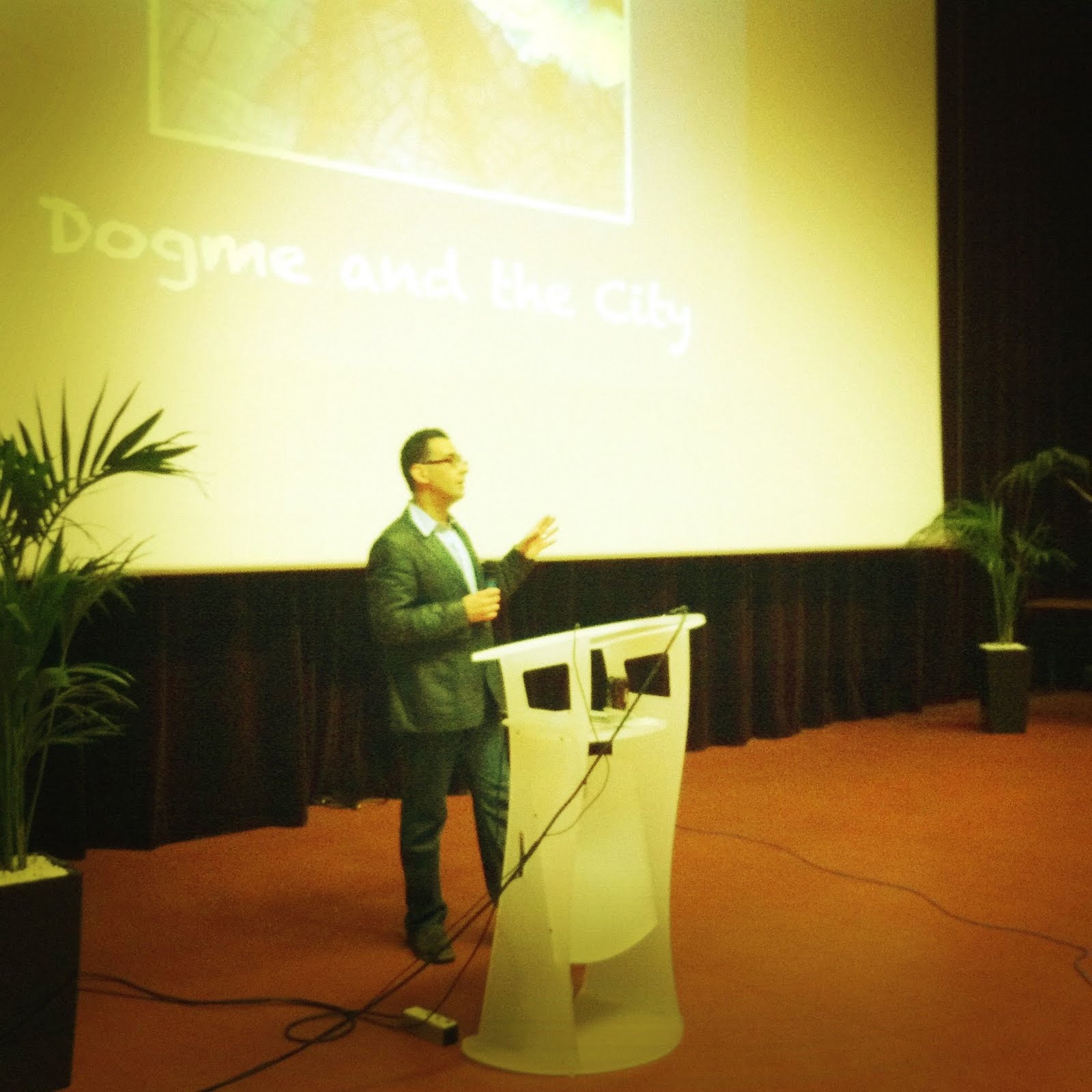
Luke Meddings takes us on a dogme tour of Paris
    • Luke Medding’s fascinating plenary compared the city planning of Paris with the planning of a lesson. I loved his analogy of how we explore cities and language. And in case you are wondering why we dogme fans keep banging the drum for this particular approach to teaching and learning, there are still many misunderstandings about dogme teaching that won’t go away, and I heard them repeated at the conference. It’s the usual stuff (dogme = anti-technology, it’s only for experienced teachers and so on) and it’s the reason why we have to keep making people aware of what dogme teaching really is, or indeed, isn't.

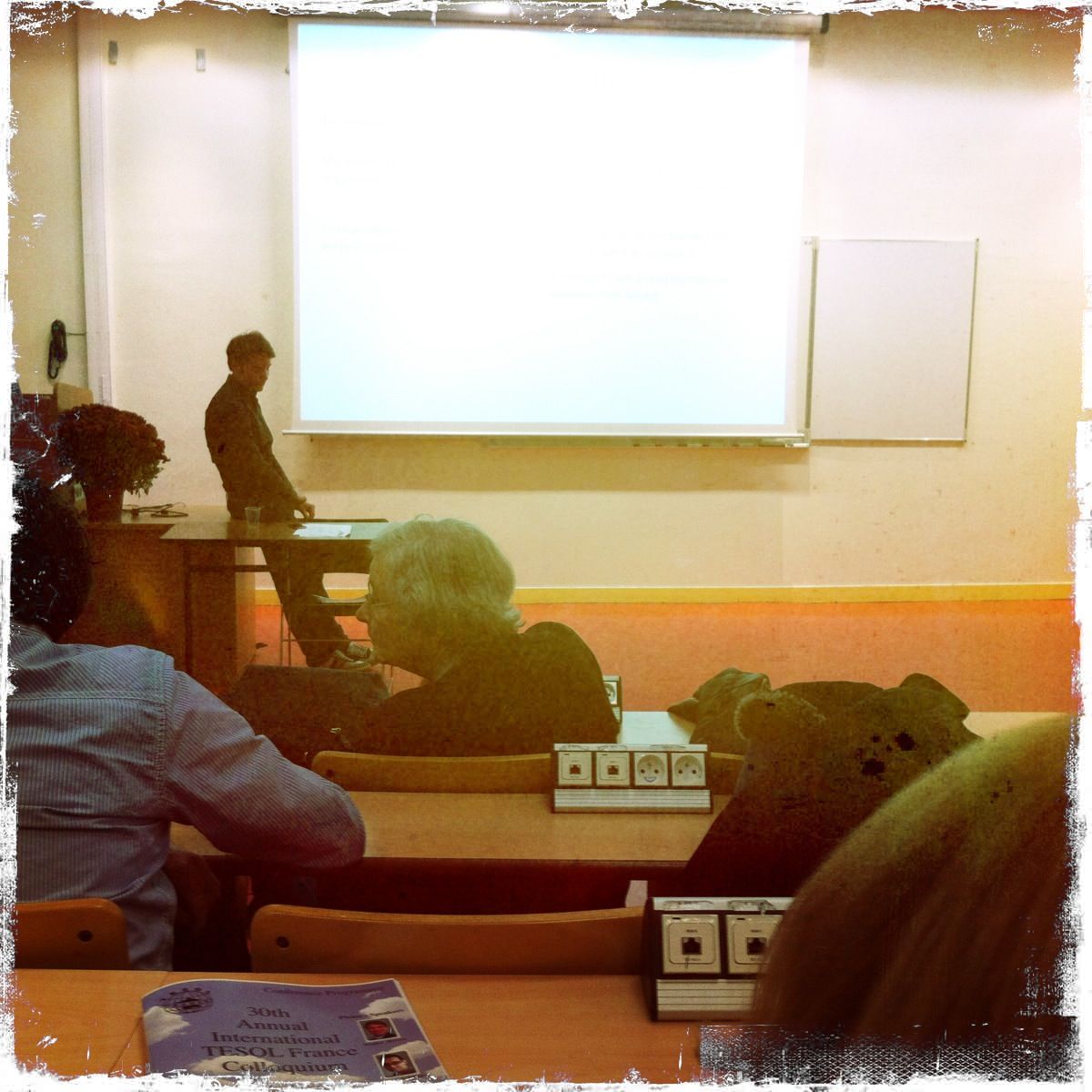
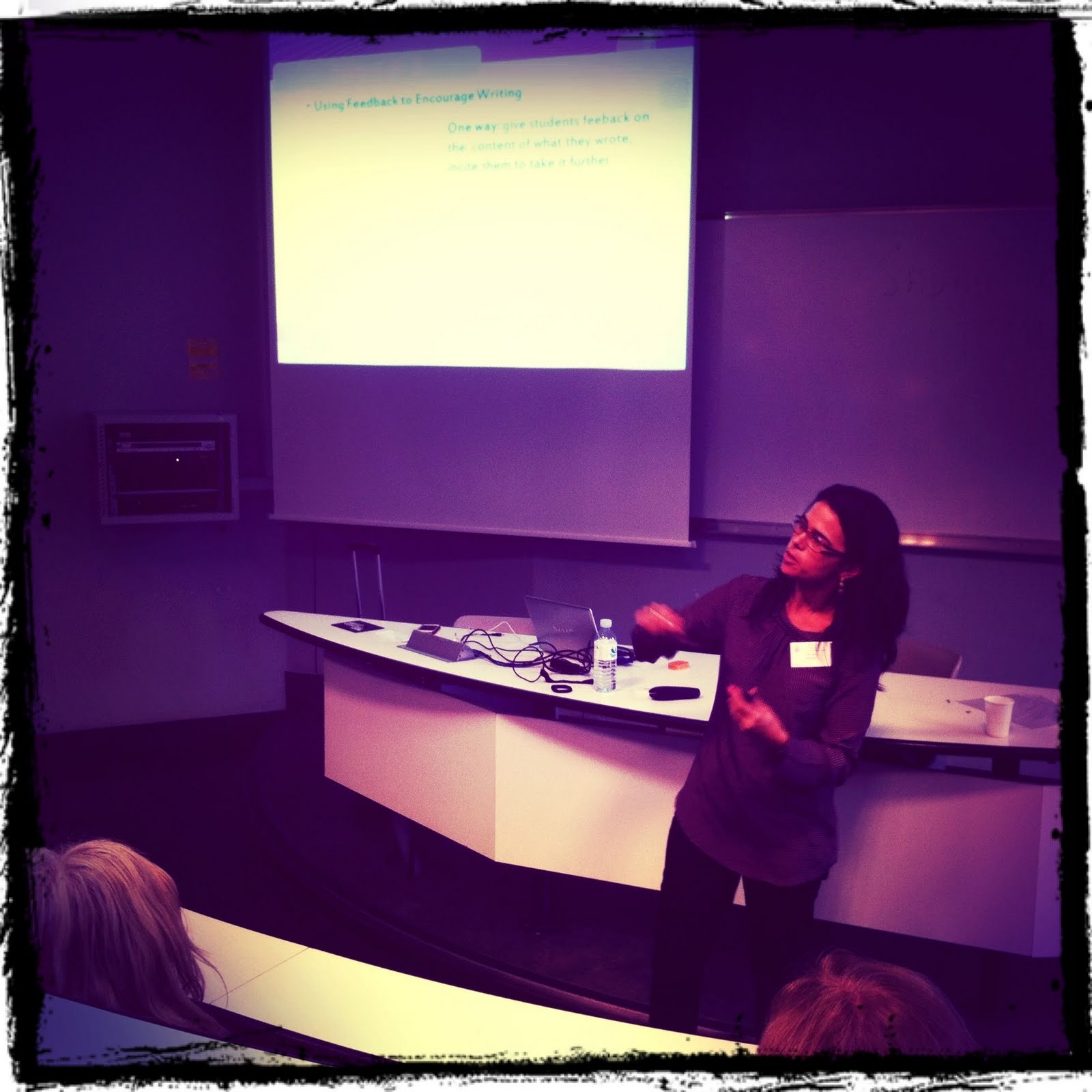
    Cecilia Lemos during her excellent presentation on writing 
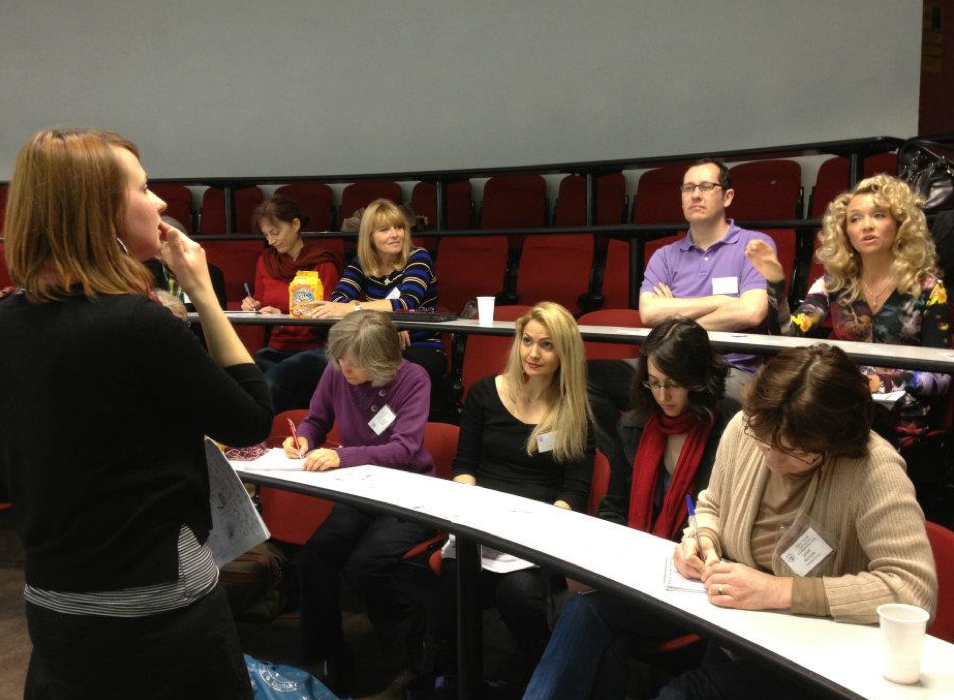
    During Weronika Salandyk's extremely useful presentation on vocabulary revision. (Thanks to TESOL France for the photo) 
    • Willy Cardoso is one clever chap. His talk, which questioned the whole idea of how we organise our classrooms, both literally and figuratively, incorporated both practical ideas, and theories from outside ELT, even outside wider education. I’m still digesting it now, to be honest. He used a term, ‘enabling constraints’ which continues to fascinate me. I’m going to come back to this many times, I think.


    Dale Coulter having a well deserved breather during his great session on reflective practice.
    • Bethany Cagnol and her team were magnificent. It was a great conference, extremely well organised with a fantastic line up of speakers. Congratulations to everyone involved.
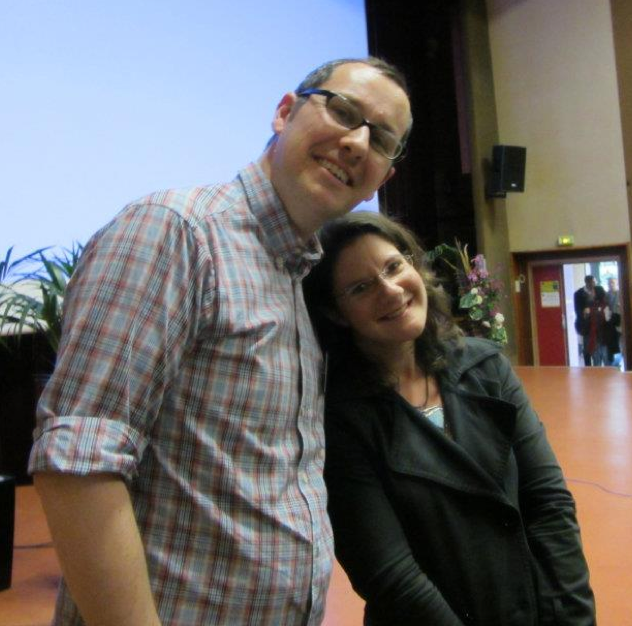
    Me with Bethany Cagnol, president of TESOL France and all round legend. (Thanks to Ania Musielak for the photo)
    • As amazing as all the presentations were, the main reason to go to a conference like this is the people. Brad Patterson has written a lovely post on this subject, as has Matt Ledding, and I couldn’t agree with them more. Something special happens when the PLN comes together and it leaves all of us changed for the better. Until next time my friends...
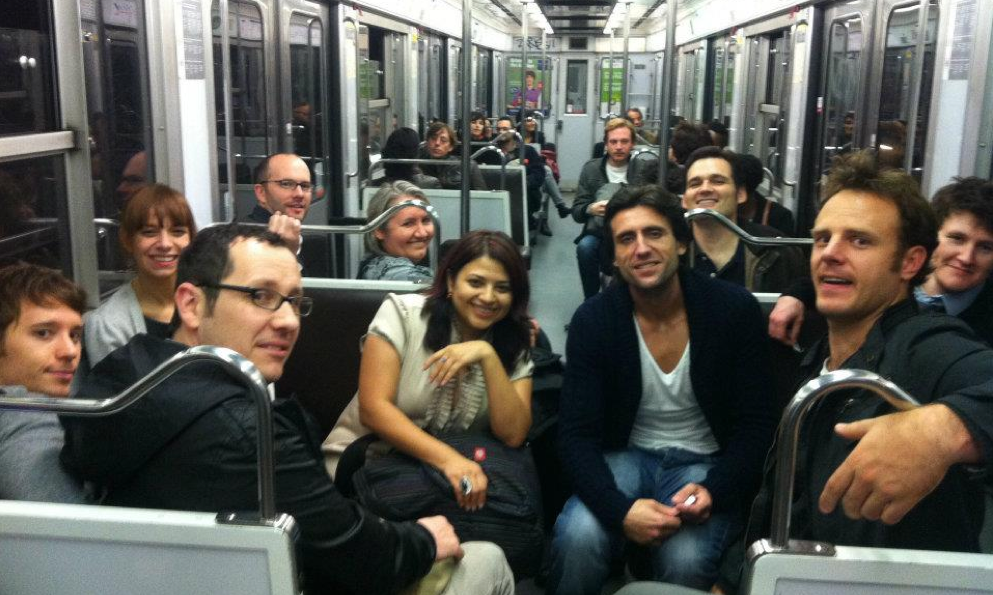
    Le PLN on Le Metro (l-r Dale, Ania, Me, Mike, Hieke, Shelly, Dave, Matt, Brad & Mike). (Thanks to Cecilia Lemos for the photo)

    • And finally... English teachers in Belgium need to be given an opportunity like this.
    Some other Paris posts:
    Read more ►

    Monday, 24 October 2011

    Learner Diaries: Reading, Stories & Vocabulary.

    7 comments
    This is a picture of my Portuguese homework, which I'm showing to you as a cautionary tale. If you give a text to your students and it has as much highlighted text in it as mine does, the chances are that they are not really reading the story. They are more likely to have their heads in the dictionary than they will be getting involved in the narrative, questioning the characters motivation or attempting to understand the author's point of view, all things that fiction is supposed to provoke.


    When reading becomes solely about vocabulary acquisition, so many opportunities for debate, discussion, engagement and real intellectual stimulation are missed. So do your students a favour and give them texts they will actually enjoy reading. Trust me, I'm telling you this from a student's point of view.


    Read more ►

    Friday, 21 October 2011

    Blogoversary & Blog Challenge: What's Your Story?

    4 comments
    Last weekend it was my first blogoversary. A big thank you to everyone who has stopped by, retweeted the links, added me to their blog roll and RSS feed, and commented. The following post is part of Vicky Loras’ blog challenge and it seemed to fit with my first proper post from just over a year ago. In the challenge she asked us to reflect on one of the options below:

    • Have you made a big move?
    • A career change?
    • Have you been teaching and living in a country for a long time, but have seen changes in yourself as a person, educator or both?
    • Are you thinking of a change in the future?
    I’ve written about a moment when everything changed for me. I hope you find it interesting (and not too self-indulgent!).

    Time to decide...
    I studied Media Studies, specifically television production, at university. I studied it because I was, and still am, an avid consumer of the media and the arts. I also am very interested in the interaction between the media and society, and how their complicated relationship affects our daily lives. The fact is however, that academically I wasn’t a great student and in the end, due to a number of factors some of which were my fault and some which were not, my final grade reflected this. This experience has undoubtedly influenced my current belief that there is something fundamentally wrong with how we approach our education system, but that’s too complicated to explain here.

    I worked on films for the year after I graduated, and while I enjoyed the work a great deal, I didn’t feel particular comfortable in that world and with those people. I was a shy man in a world of self-aggrandisers and show offs and it wasn’t for me. (I did meet some very nice people too, but they weren’t generally the ones who could get me work.) I also wasn’t prepared to spend years without any money, waiting on the slightest glimmer of a break. I just didn’t feel cut out for it. The problem was that I didn’t know what it was I supposed to be doing instead.

    To pay the rent, I took a temporary job. It wasn’t interesting at all, but the money was pretty good and I could keep myself supplied in records. Somehow, and I still don’t know how, I ended up doing that supposed temporary job for three and half years. As I sit here and type this I still find it completely inexplicable that I worked there for that long. I know we’re not supposed to have regrets, but I can’t help but wish I’d made more of that period of my life.

    And the question remained: “What am I going to do with my life?” After a mercifully brief stint in a bank, I got a job in a massive central London music, film and video game store. I enjoyed it there, largely, working my way up to the position of buyer, but it didn’t fulfil me. It was a job, I didn’t hate it and it paid enough, but I hadn’t found what Sir Ken Robinson calls the Element.

    The fact is that I was searching, like so many of my generation, for a job that satisfied us creatively, morally and professionally. We wanted to do something interesting, worthwhile and valuable, but those jobs are not easy to come by or even to define. The idea that I would become a teacher and live abroad was so remote in my thinking, I hadn’t even considered it as an option. It just didn’t figure at all, for reasons I’m still not sure about.

    But move abroad and teach I did. For personal reasons, I had the opportunity to move to Brazil and I lept at the chance without a seconds thought. That really isn’t an exaggeration either, I literally said yes to moving there without any pause for reflection or time to think. I didn’t need a couple of days to mull it over, or to ponder over my decision with a cup of tea. I didn’t speak to my Mum or my friends, I just said yes and it all hinged on that moment.

    I think my lack of hesitation came down to the fact that I was searching for something and an opportunity presented itself. I was craving a change, an adventure, something needed to take my life by the lapels and shake it around. I didn’t know what I was going find, but I knew it was definitely going to be different from what I’d left behind.

    Moving to Brasília, I had no choice but to become an English teacher and luckily for me, I adored it. Everything fell into place and I could look back on the previous ten years and see how everything should have gone, how I should have read the signs and studied English Literature at university, how I should have gone to a far flung corner of the world when I graduated to teach English to a room full of exotic kids, how should have got the bug and taken my CELTA and started along the unpredictable career path that is TEFL.

    Unfortunately that never happened, but if it had, I wouldn’t be here now and I wouldn’t be half as grateful for discovering my Element, the thing that I love doing more than any other, which is teaching English.


    If you’d like to read about my first ever class, read this post from October last year:


    Read more entries in this challenge by heading over to Vicky’s blog:

    Read more ►
     

    Copyright © TheTeacherJames Design by O Pregador | Blogger Theme by Blogger Template de luxo | Powered by Blogger