Tuesday, 22 October 2013

Cheat!

6 comments
Here's a lesson idea I came up the other day. I was trying to spice up a rather dry FCE coursebook reading on animal cheats so I decided to add a video to the mix. After figuring out these activities, I realised that I wasn't so much improving the reading activity as I was replacing it with a listening, so I changed direction and did something else.

But rather than waste all that hard work, I thought I'd share it with you here instead...
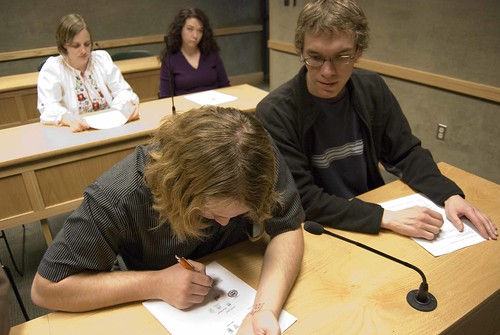

Is JR Cheating Off a Cheater? Or Will He Turn Rat?

1) In groups, ask the students to list all the things they think of when they think of the word 'cheat'.

2) Put their answers on the board in a mind map.

3) Ask them to discuss for a couple of minutes if they think animals can cheat. Get feedback on their opinions.

4) Put students into pairs. One student is A and the other is B. A watches the video without sound.


5) Students A then describes the video to their partner. B tries to remember what happened.

6) Mix up the pairs so all the A's have new B's to talk to. B's have to try and describe the video to their new partner. A's add any missing information to their description.

7) Play the video still without sound. Ask the students to see how they did and what they missed. Did it look how they expected?

8) Ask a couple of students to volunteer to describe the video while it plays. Put some of their best sentences on the board and analyse them with the class. Use them to create a script which class collectively builds with your help.

9) Show the students some vocabulary from the video. You could put it on the board or show it to them visually like this:


Ask if any of the students know what these words and phrases mean. If they don't (and they probably won't know most of them), ask them to identify whether they are nouns, verbs etc.

10) Now play the video with sound. ask the students to try and understand the new vocabulary from the video. You might need to play it more than once.

11) Once students have grasped the meaning, ask them to fit the new vocabulary into the script that you created together.

12) Ask the students to discuss a time someone played a trick on them or deceived them in small groups. Optional homework: Write a description of when someone deceived you.

cheating-husband6
Hopefully nobody will write about this...
Read more ►

Tuesday, 15 October 2013

My Talk At RSCON4

6 comments
My co-presenters during RSCON4
I had the great pleasure of presenting at the RSCON4 conference on the 13th of October. It was an online global event highlighting “wow” moments in teaching and learning, and the entire conference was held online. I'd like to thank all of the organisers for putting together such an amazing event, everyone who came, and my moderator Malu Sciamarelli.

Unfortunately I wasn't able to attend many sessions as I was travelling, but I will always remember giving my presentation. I had to do my talk from a hotel room in the rainforest of Costa Rica, and five minutes before the start I was warned that there was a group of howler monkeys sitting outside the room! Twice during the talk I had to apologise to everyone for the noise, and make sure that they knew it wasn't me screaming away at the top of my voice.

So if you'd like to watch my talk Making The Most of Reading including my monkey friends, you can find it here.


Presenting, jungle style!

Read more ►

Monday, 9 September 2013

P Is For Bacon

7 comments
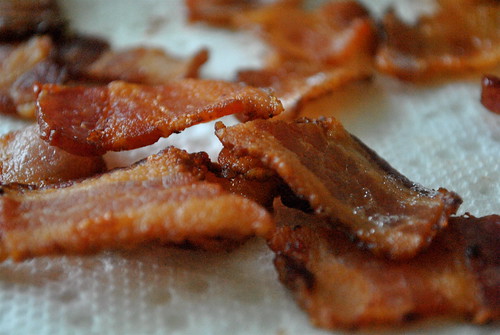
Bacon
Crispy

A couple of weeks I hosted a workshop at my school on the subject of parsnips. Parsnip is an acronym standing for the subjects that coursebook writers are allegedly supposed to avoid:


Politics
Alcohol
Religion
Sex
Narcotics
Isms
Pork

We had a really interesting discussion on the subject, looking into the reasons behind why this happens and the result of this decision to omit what many people would consider to be some of the fundamental building blocks of life. For our homework, we took a parsnip each and created an activity which we could share in the following week's workshop. I decided to try and create a pork lesson plan.

Pork is perhaps the parsnip which stands out the most on the list. For many people, at first sight it takes a moment or two to figure why it's even there at all. Then the realisation hits, and you remember that for a large proportion of the world, food from a pig is a serious taboo. But in a culture such as the one I teach in where pork is not so much forbidden as it is a national dish, was it possible to create an interesting and challenging lesson plan that effectively communicated this issue?

Well that's what I tried to do. I haven't had the chance to teach it yet, but I think it would provoke some interesting reactions, some cross cultural awareness and of course, some meaningful learning opportunities. And if you have any feedback for me, please leave it in the comments below.


1. Ask the students to discuss this questions in small groups: 
  • Do you have any food taboos? Is there anything that you would never eat? Why?
  • In some areas of the world, there are foods that are not allowed. Do you know any of these  places and the foods that are banned?
2. List these religions on the board and ask the students to match them to the banned possible foods:

Judaism
Islam
Hinduism
Mormons

frogs / hot drinks / cat / blood / pig / cow / onion / crocodile 

Answers (make sure the students know these answers are in some cases generalisations, such as onion and hot drinks):


Judaism - Frogs / Crocodile / cats / 
Islam - cats / blood / pig
Hinduism - cow / onion
Mormons - Hot drinks

3. Tell students "You’re going to watch an interview with a man who was raised a Muslim. He’s talking about bacon. What do you think he will say about it?" Students discuss in groups.

4. Give the students a handout with this group of sentence stems repeated on it three times.

“One of the other waiters dared me to eat bacon, and he dared me because he knew I was a Muslim and it was a forbidden thing, and ……………………………………………………………………………………...…………......”

“We have a choice ...……………..…………………………………………………………….”

“Eating pork for me is ……………...…………………………………………………………..”


Ask them to predict how he will finish the sentences.

5. Now tell the students "If I told you that the man now considered himself an atheist, how would you now finish the sentences?". Ask them to try and finish the sentences again with a new version.

6. Students watch the video and then compare their predictions with his answers.

7. Ask them to watch the video again and try to write his actual answers.

8. Discuss in groups your reaction to the video. (Possible discussion questions: Did you realise that a food could be so meaningful to someone? Is there anything like this is your culture, food or otherwise? How do you think his friends and family reacted to his decision. How do you think his co-workers reacted when he ate the bacon?)

9. Follow up written activity - ask students to write his diary entry for that day, describing the incident and how he felt after.


Pigs in blankets
I am indebted to Clive Elsmore (@CliveSir) for the video that this post is based on. It was originally posted in the comments of this blog post:

http://esolinshetland.blogspot.com/2012/07/pork-and-final-parsnip.html


Photo credits: 

Crispy - Photo taken from http://flickr.com/ by @cookbookman17, used under a CC Attribution Non-Commercial license, http://creativecommons.org/licenses/by-nc/3.0/"
Pigs in Blankets - Photo taken from http://flickr.com/eltpics by @sandymillin, used under a CC Attribution Non-Commercial license, http://creativecommons.org/licenses/by-nc/3.0/
Read more ►

Thursday, 20 June 2013

A North Korea Q&A

4 comments

Last month Ann Loseva, a fellow teacher in Moscow, asked me to answer some questions from one of her students about North Korea. She asked me because I visited the country in 2010 and had written about it for the travel website Global Grasshopper. She had used the article with her student who wanted to know more, so together they made a list of questions and sent them over to me.

I'm certainly no expert, but since I've been there, I did my best to answer the questions. I decided to answer the questions in a video, and since I'd gone to the effort of making it, I thought I'd might as well share it with you. Hopefully some of you will find something useful in it.


The questions I answered:

1. What do people do when they take rest?
2. Where do people travel?
3. What programs are shown on TV?
4. What is daily routine of people?
5. What are the main subjects at school?
6. What is the level of healthcare?
7. Who do children want to be?

If you do find a use for it, let me know, I'd love to see what you do with it.
Read more ►

Monday, 10 June 2013

Silent Movies - The BELTA Day Special Edition

0 comments
Just before the workshop...

On June 1st, BELTA (the teaching association of which I am president) held its first ever national conference. We were delighted with how it went, the speakers were fantastic and the delegates were enthusiastic participants. I’m already looking forward to next year.

On the day, I hosted a workshop based on the Silent Movies series of posts on my website. I showed four movies to the participants and asked them to share their ideas in groups for how they would use each of the films. I didn’t set any parameters, they were free to think of any idea they thought was interesting or useful.

After each film they discussed their ideas and made some notes. They then nominated their favourite idea from the discussion and shared it with everyone. I collected their notes in order to share some of their ideas here on the blog.

Note: All of these films have been featured in Silent Movies posts here on the blog before, but never with these ideas.

Words


Group 1 Before the film starts, give the students a list of all the words they will see illustrated in the film. Then get them to check common collocations with these words in a dictionary. Once they have these listed, show them the film and ask them to make a note of how many they see.

Group 2 also looked at the different meanings of the words, such as light “bring something to light", "light a cigarette", “let there be light". Play the video and then the students can write down all the different meanings they could remember which were seen in the video. Then they could write a story using as many phrases as possible, therefore putting the phrases into a context.


Oktapodi


Group 1 Students write a script the film - what would the characters be saying if they were speaking? They can then act the dialogue out in front of the class.

Group 2
What will happen next? Ask the students to suggest what would happen if the film continued. This would provide them with the chance to practice inferencing, predicting and using future tenses.


The Scream


Group 1 This group focused on the dialogue spoken at the beginning, and suggested asking students to use reported speech to describe what the men say.

Group 2 suggested showing other paintings to the students and asking them to choose a piece of music they think would go well with their painting. They then suggested that the students combine the music and the painting by recreating how the people in the painting would move to the sounds of the music.


Lifted


We didn’t have time for suggestions.


A big thank you to everyone who came to the workshop, your participation was much appreciated.

Thanks to Krishnan Coenen for the photo.

Read more ►
 

Copyright © TheTeacherJames Design by O Pregador | Blogger Theme by Blogger Template de luxo | Powered by Blogger